Showing posts with label David Cameron. Show all posts

Wednesday, 16 September 2015

Corbyn ushers in new style of PMQs

Today marked the begining of the Corbyn era of Prime Minister's Questions and I must say that I have been really impressed.

Many of my regular readers will know that I have not a big fan of the Labour party over recent years and am still dubious of many of their policies/MPs etc however I thought Mr Corbyn hit the nail on the head.

Charles Kennedy wrote in his book "The Future of Politics" that the House and indeed PMQs was stuck in a rut of like a Rugby game with two sides vying for supremacy and scoring points. Indeed over recent years it has become about bluster of;

"Thireen years of Labour government.... blah blah."
"More of Flashman... Same old Tory Party."
*knod* *knod* *knod*
Ultimately it did nothing to encourage any support for either party and was generally seen as an out of date process with people who should know better acting like school children on a long bus trip and being paid a large amount of money to do so. There also became a penchant for commentators of stating who had won or lost PMQS and often with a goal line in publications like the Evening Standard which trivialised the whole process

Mr Corbyn had a very different approach and had asked the General Public to submit questions which he and his staff (more likely the latter) had whittled down to a much smaller number of the most numerous.

Siting examples he asked calmly and collectidly about housing policy and benefits caps. The Prime Minister was forced to abandon his usual flashy displays and spouting and had to answer in a similar style.

Although I am always distrustful of siting an individual's experiences and passing them off as fact, something my Historian trained mind rejects as dangerous. One person's experience is not always everyone's nor is it fact. In this case however it does make the point that he has asked the public and real people are speaking through the new Labour leader.

It was a much more refreshing and dare I say it "grown up" approach to actually conducting business and actually holding the Government to account from the electorate rather than Political point scoring.

It is a style of politics that the public (myself included) can get on with and I look forward to more of the same in the future.

Sunday, 29 September 2013

Who can you trust in Government?

Add caption
As 2015 gets closer and closer I'm starting to look ahead to the election and what the various national parties are planning and offering policy wise.

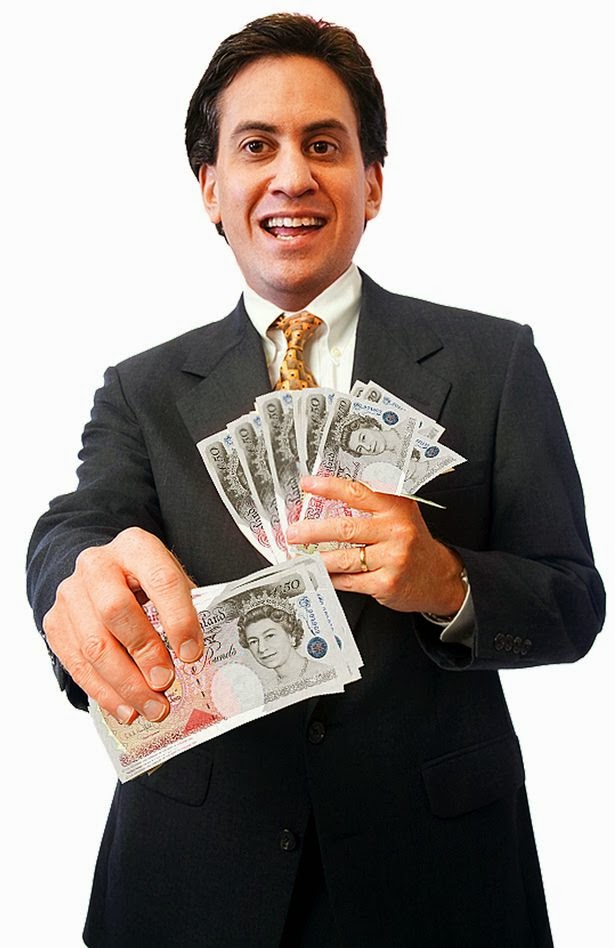
Ed's Labour party have done well in the polls mostly by saying they would not do what the Coalition would
do (but would not reverse it if they got in.) Considering some of the policies that have come out of CHQ (the things we have had to agree with) it is fairly to score points this way.

However it does seem that Labour have been picking at holes and nitpicking at times over successes and playing games with statistics. No one deserves to gain power by using technicalities, there is no substance to this.

Back in 2010 I watched Germany beat England 4-1 in the South African World Cup whilst in Wales. Whilst driving back to England and listening to the fall out on Radio 5 one of the common themes was that players like Gerrard, Lampard, Terry and Ashley Cole - all of whom had played badly, should be dropped from the squad and younger players could get a chance and the FA would not be fielding "Names"

The same is true of the Labour party front bench. Yes Darling, Brown and Blunkett have been quietly dropped but yet Ed Balls, Keith Vaz (who had some hilariously high expenses), Harriet Harman and even Ed Miliband are still leading the fray. these names are still linked to the failures of the Brown administration and hardly inspire confidence or trust.

The same can be said about Ed Miliband. He makes a fair opposition leader but... he seems to be lacking the qualities that would make him a good Prime minister. He lacks the charisma and personal magnetism.

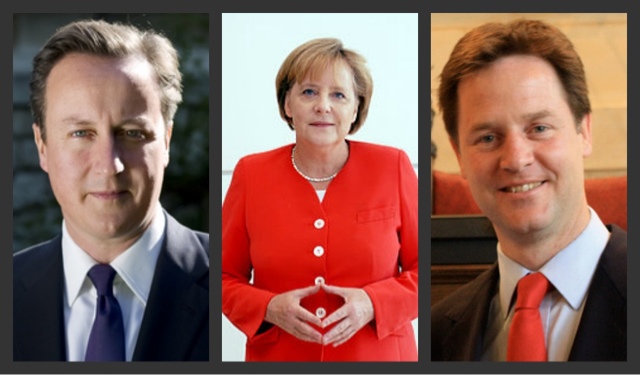
As for the Conservatives... Despite having some really good MPs (like some of Labour) they are a party divided, especially with UKIP pushing into the normal territory and securing Right wing voters who grudgingly supported Cameron as there was no other choice before. Desperate to keep these staunch Tories the party seems to be lurching right.

Social engineering in the form of Marriage tax relief, anti European dogma, refusing mansion tax and reforms to the House of Lords, doggedly holding onto Trident - it is a party trying to move forward but maintaining footholds in the past.

Though Cameron strikes me as more of a leader than Ed. Maybe it is the brash Etonian accent and cavalier way he responds at PMQs but he is definitely more charismatic.

The LibDems however have brought in policies that have directly benefited my family. We have a pupil premium that is helping our local school, free nursery hours which saves us 15 hours a week on little Sophie's bill allowing my wife to go to work, lifting my wife out of income tax altogether and halving mine.

Yes, there is the ink blot of the tuition fees and other things they have gritted their teeth and voted for and despite his great personable charisma, this is something that will haunt Nick Clegg's political career for many years to come and could and will blight him as a possible leader of the country. However my wife, who is non-partisan and she has told me that on this strength alone she will more than likely vote Liberal Democrat in the future on the strengths of the party actually promising to help the people and actually doing it with in the confines of deficit.

Saturday, 28 September 2013

Married Tax break - looking backwards?

Firstly I'd like to thank Dave and the Conservatives for bringing in this policy. With the cost of living
(and commuting) rising, my wages at a 1% rise well under inflation and my job looking fairly uncertain after next April any extra pennies are greatly received.

However - it is still bollocks.

I'm not sure what the Conservative high command were thinking about when this idea was floated. Is it a return of traditional values? Is it to try and build up marriage as the stable relationship for bringing up kids? Is it an attempt to return to the golden era of MacMillan? Eden? Or even Baldwin and Bonar-Law?

Society has moved on. With the decline in religious belief and people being more secular and with a lot of people unable to pay for weddings now they cost so many thousands of pounds people are just staying in committed relationships and what really is the difference?

Does the tax break cease if you have a divorce?

My Dad left us when I was Eight years old and my Mum had to bring myself and Gemma up on her own yet would have needed a tax break! Further to that both my Sister and I understand commitment and both of us have families of our own and are married - Not to each other obviously, I grew up in Kent not Alabama!

Many children from "broken" homes grow up to fine by society's standards, in fact no worse than children who grow up with both their parents.

The foundation of family life is not marriage it is commitment between people and that doesn't have to be ratified by a church or the state - after all you can get married and the relationship can break down in a year or two, you can stay a couple and be together until the day you die. In deed I never wanted to get married. As far as I was concerned it was just a piece of paper that sealed what my family and friends already knew - that I loved Sam and wanted to be with her. In deed we were together for five years before we tied the knot and we've been married almost five years and my feelings have not changed for her at all in that time, indeed I would have brought my children up in the same way had we not been married. This thin strip of white gold on my left hand would not stop me from being a bad parent or from being a bad husband or even cheating (was I that way inclined).

But I should be clear to say once again, I love my wife now as much as the day I married her and the day we got together.

But that should not entitle me to a tax break.

It is fairly discriminatory (despite Jeremy Hunt's protestations here). Why should one set of people get it and not any one else in similar situations not? It really does ascribe a certain weight to an ideal too. What of those struggling single parents whose partners have walked out? Or been abusive and they have taken a stand and left them now found themselves cut off?

Relief from Taxation should be based on financial situation not on family setup. Should we hand out tax relief to those who are confirmed in their religious faith as religion traditionally set people up with values for life and let the atheists suffer?

Jeremy Hunt says this is not a judgement... he says Love is love yet unless you get the piece of paper in what the State is now dictating is the only way they accept that you are committed and in it for the long haul - you won't receive the benefit.

Clearly this is not a well thought out policy and the cynic in me says that this is an attempt of the Conservative party to recapture votes from traditionalists and their original core of voters who may have been turned off by the Equal marriage bill.

Oh and Jeremy, if you are reading this, rather than Love is love (which I think I read on a fortune cookie once) I'd like to offer up the German writer and philosopher Johann von Goethe's definition:

True love is love that stays constant for ever, whatever its fortune:
Whether requited or scorned, filled or sent empty away


Or:

Without a doubt, the only thing that makes Man's life on earth essential and necessary is love

Friday, 13 September 2013

In Clegg we trust?

As Conference comes around again there have been the usual rumblings and suggestions in the Press that Nick Clegg's leadership of the Liberal Democrat party is coming to an end and that dissatisfied activists are going to try and oust him this weekend or make serious challenges to his leadership.

These have proved baseless since the Tuition fees rise three years ago but still haunt the party. The thing is there is light at the end of the Coalition tunnel and many activists are starting to look at 2015 and wondering if we were to go for a new leader now would be a good time to get them in and feet under desks.

Although Nick has scored many goals for the party and we have got more than we deserved out of the Coalition agreement (so much so the Tories are claiming our policies for their own!) I do still fear that we have been tainted by some of the rotten policies to come through this government. Controversial bedroom taxes, the badger cull, harsh economic cuts that could have been handled a lot better and the rise of train fares yet again.

I was brought up to be able to think for myself, however I also learnt and accepted the line that I should follow orders quietly and just get on with things and I have supported the Coalition through the rough and the smooth despite any misgivings.

I had hoped we would be more vocal in our opposition to some of the Bluer policies but that has not come to be despite the Lords reform betrayal.

Indeed Nick has rebelled against the Government once...

His popularity with the voters has plummeted over the last few years and there is a raft of really disgruntled members (the ones who haven't left us for Labour) and there are others like me who are starting to waiver a little bit.

I personally feel uncomfortable with some of the policies that we have put our name too and although I think we will survive and be in a stronger position come 2015's election I do feel that maybe new Leadership is required to help us stand apart a lot more.

Don't get me wrong, I love Clegg. I think he was fantastic and personally very charismatic - it was his pre DPM campaigning and ethos that brought me forward to be active in the first place but he has been lost in David Cameron's shadow and unfortunately I fear that his star has dulled and he has agreed with Dave one too many times.

Whether Conference will ratify him again or revile the Coalition is something to be seen and I will stand where I have always stood, behind our leader whomever that will be.

Thursday, 9 May 2013

Child care must be affordable and for the kids

This morning it is hitting the news that Nick Clegg is opposing or Not convinced by the Government's
proposals to adjust the ratios of Children to staff in nurseries across the country.

The ratio will be increased to 1:4 (from 1:3) for babies and up to 1:6 for two year olds.

There are some concerns that your child will not necessarily get the attention they may need. Two year olds are exceptionally boisterous and into everything - which I am finding out for myself - and I have trouble keeping up with one let alone six! The level of quality can be much depleted.

Through in a child like mine, who has a certain amount of special needs and you are losing even more time. Due to Sophie's condition she does require phsyio and attention for her leg splints and boots. Her walking and running can be very dicey and if there is a fire alarm she needs to be carried out - this can take up a lot of time for a member of staff and we're more than fortunate that her nursery has some really good staff. However in a room where the girl has another five other children in need of attention things will become stretched.

I'm aware that the Ministers announced that the increased ratio is similar to Germany and less than France but let us not be hasty and rush into this - let us listen to parents and staff alike and progress at a reasonable rate and get this right. You cannot make rushed mistakes with Children's futures or education.

Children respond best with stimulation and as much contact as possible, by raising the ratio you are taking some of that time away from them.

Nick was quoted in the Guardian as saying;

It is not a great ideological thing, it is about getting it right for parents up and down the country. When the last government changed the so-called ratios for three- and four-year-olds, it had almost no effect in reducing the costs for parents whatsoever, so you do need to be led by the evidence and that is what I will continue to be in the debate

I would challenge you to spend a morning look after six two-year-olds

As I said recently, the Cuts are now going to impact my family in Gillingham with the rising of nursery costs on the one hand for parents and the slim lining of Surestart centres and nurseries who are asking staff to reapply for their jobs and taking voluntary redundancy.

The ratio of staff and thus the care and attention that a child needs are being cut and we - the already stretched taxpaying parents are being asked to pay more for less.

There is also the somewhat nonsensical approach that is seeing parents priced out of putting their young ones into day care so that they can go to work as the second income is barley covering the costs - it becomes more cost efficient for one parent to give up work completely and stay with the kids at home!

There are some serious (LibDem) boons that are helping working families like mine, the cut in Income tax means that my wife's income is now completely tax free, the free nursery placements for three year olds will help during term time too but until then we're quite stuck and so are many other families.
Many of the mothers that my wife knows through Sophie's friends have all expressed concern about the rising prices and are not in a position to pay it. My Sister's sister in law found that she had to give up work to look after her young children and my sister is looking at the same scenario.

David Cameron ran under the banner of making things fairer for families and working people and yet these reforms are getting kicked in the wallets and our children are being made to suffer in these reforms. Having a family, even the average of 2.4 kids, is now a hinderance and it feels like we're being persecuted for having kids. Child care has to be affordable for all so that children can go into daycare and both parents can work to pay for all the other rising prices in utilities, food and transport costs.

Let's take a moment. Look at the situation, talk to parents and staff then reevaluate the situation

Wednesday, 10 April 2013

Cameron, Trident and North Korea

I thought on the day that is timetabled as the end of the world and the day Kim-Jung Un orders his men to march south, that I'd write a small piece on why David Cameron was wrong about Trident being a good thing going into this possible conflict and why ultimately it doesn't make any difference.

Nuclear weaponry is something that the world wishes it could un-invent. One of the reasons the Allies pushed to coming up with an atomic bomb was just to act as a deterrent to the Axis powers having them and maybe starting the cold war early. The problem was the Germans hadn't the materials or means to deliver such a weapon and little real understanding of what the device would be. One scientist told Feldmarschall Milch of the Luftwaffe that an atomic bomb would be about the size of a pineapple!

When it came to bombing Hiroshima and Nagasaki the Allies only dropped the bombs to demonstrate to the Russians the power and awe that they had harnessed. Don't believe the argument that it shortened the war and saved the landing of troops as the USAAF, RAF, RAAF, RCAF and VVS all had enough munitions, aircraft and personnel to blast Japan back to the stone age with a lengthened aerial bombardment, the kind of firestorms and brute force that had been meted out to Germany's cities like Hamburg, Ulm, Dresden and Berlin.

The same is now true for North Korea. The UN and NATO have access to such a vast air fleet of strike aircraft, should North Korea go to start a war then within three days complete aerial supremacy could be attained. Don't be fooled, the CIA has got enough information on North Korea to properly assess their nuclear capabilities and their military strength and locations. This is no Cuban missiles crisis, nor the Balkans tensions in the late 90s when Russia and the West squared off over an airfield.

Nor is this a case of the Eastern bloc facing Democracy. The Warsaw pact powers no longer exist. Only China stands behind North Korea and they would back away should nukes start flying around the place!

Kim-Jung Un's nuclear delivery is really quite limited with only South Korea, Japan and maybe Guam falling in range. Though there are bigger rockets under development that could be used against Australia, Los Angeles and San Francisco they are far from ready.

As for Great Britain's contribution? Well last week David Cameron smugly stated that it was for moments like this it was a good thing we still had Trident.

Really?

The USA still has a massive arsenal of ICBMs and Stealth bombers able to launch from American soil and deliver a nuclear blast into down town Pyongyang.

What would they want our small fleet of submarines for?

England isn't under direct threat and our small amount of nuclear power would be a drop in the ocean compared to what America can fire.

The nation would be better off scrapping an obsolete relic of the cold war and investing the money into our ailing economy and job creation.

Monday, 18 March 2013

Norman Baker making tracks

Interestingly, Libdem Rail minister Norman Baker's band is releasing an album.

The band was re-formed in 1990 and Mr Baker was quoted in the Metro as saying this;

I've done it now because I thought I should get round to it before I'm too clapped out. That'll be about ten years hence.

I would't write a song slagging the prime minister. I was never going to write about politics. That would be naff.

However, that's not the thrust of this post. As I read the Metro the reporter, Fred Attewill, had included a retort from the Tax Payers alliance's Jonathan Isaby:

I hope it doesn't distract him from the huge cost of HS2, with which he is about to burden the taxpayer. He needs to make sure his sums add up.

Wha?

Ok, I get the relivance, really I do but for Pete's sake. It's what Norman Baker does in his personal time, completely devolved from politics.If Norman Baker was making a complete hash of his post or wasn't working dutifully then, yes I'd take the point but he is so what are the TPA chattering on about?

Everyone has there personal life away from Government be it local or national and in this case the story is a purely, almost fun story, of a minister showing his human side.

Would anyone judge local Cllr Chris Irvine for being in a band?

Would anyone judge Nick Clegg for taking time off with his kids? (sadly yes)

Would anyone judge David Cameron bringing his boys to the Imperial War Museum?

Would anyone judge Tracey Crouch for managing her Girls Football team?

It's got bugger all to do with politics or policy it's what he does in his personal time and as long as doesn't interfear with their work lives then what's the problem?

For me I'm kind of lucky, Politics is my hobby really, something I do when I'm not at work or with my family. It is for my quiet time or Train time until I can afford a really nice model train set - then I'm sure a detractor would attack me for doing that and not looking at policy!

Friday, 15 March 2013

Nick Clegg on Cameron's step down

As you may have seen this morning the Prime Minister has decided to call off the cross-party talks on implementing the Leveson proposals on press regulation.

Throughout the talks I have sought to defend a free press while making sure ordinary people can be protected from unwarranted harassment and bullying by powerful interests in the press.

I was surprised and disappointed when David Cameron told Ed Miliband and myself that he felt there was no chance of us reaching an agreement. The talks had appeared to be progressing well with a genuine desire to come to a solution that would provide a robust, independent press regulator.

There are some issues - such as allowing the press to veto who sits on the independent regulator and whether the regulator should be able to direct newspaper apologies - where I disagreed with the Prime Minister, but these appeared to be issues that could be worked through.

Lord Justice Leveson went to enormous lengths to deliver a considered verdict on the way independent self-regulation of the press should work in the future and then rightly told politicians that the ball was in our court.

I remain determined to meet his challenge and find a workable solution with like-minded members of all parties.

As I said in my statement to the House when the Leveson Report was published:

"We need to get on with this without delay. We owe it to the victims of these scandals, who have already waited too long for us to do the right thing. Too long for an independent press watchdog in which they can put their trust. I am determined we do not make them wait any more."

That remains my view and it remains what I intend to help deliver.


Thursday, 14 February 2013

Dear Dave... A break up letter from Nick

Dear Dave,

This may seem cold hearted to do this on Valentine's day and to do it by letter but it must be done.

We need to talk...

Our marriage has been in trouble for sometime and neither of us have been willing to talk about it. Things needed addressing some two years ago but we fooled ourselves by looking at other things and papered over the cracks.

I remember those heady days in the Rose garden, that summer sun full of promise - we were going to change the world together, make things fairer, greener and more democratic. Things have swiftly gone wrong.

I feel like I'm constantly giving and you taking. I've given income tax back, capped elderly care, pupil premium, scrapped those nasty ID cards but you have changed welfare taking back what I've done, ATOS, welfare reform, cuts cuts cuts... I just feel we no longer share the same interests.

Then of course there's your ex, George. I know you guys were close before the election but... You constantly take his side and I feel you don't listen to me - I gave up Vince for you, why won't you reciprocate?

I know there are many of your friends who snigger at me behind my back and there are some who actively despise me. There are times you can be down right rude about me in front of Ed and his lot to make yourself look big at my expense! It's not on, we're supposed to be partners.

Which brings me to your betrayal over the lords reform - I thought you'd at least abstain, I broke my pledge on tuition, it is the least you could of done.

Any way, I just don't think this can carry on any more. We're clearly different people with different aims in our political lives. We've tried to make it work and I will look back fondly on our time together. I will always remember the good things that we have achieved together rather than dwell on the past. We will always have the rose garden.

I wish you well

LOL

Nick

Wednesday, 13 February 2013

Horse meat is David Cameron's mad cow disease.

Queueing for a burger
I saw this heading in one of the tabloids yesterday and couldn't believe the absurdity of it. Indeed therer were many questions at PMQs today on the subject which makes me wonder - aren't there more important things to worry about?

The BSE scare in the 90s was the result of poor standards, and (if I remember the Tomorrow's world report properly) caused by the Sheep disease scrapie which was potentially past to cows.

I freely admit my science on that is almost two decades old though!

There were cases of humans catching and dying from BSE or CJD. British agriculture, which was always proud of British beef, took a serious knock and other countries like Argentina quickly took up the cheap but clean beef exports.

For the government, as well as the general public it was a serious concern. Who knew what an infected cow looked like? How many of us had eaten a bad beef dinner? Anyone could have a potentially deadly brain disease - there was a mild undertone of concern bordering on panic in some people.

Fast forward twenty years...

Horse meat has somehow slipped into minced beef/lamb.

Now, I know this is bad and somewhere down the line someone has either messed up or intentionally lied to supermarkets but let's keep some perspective.

Horse is edible.

I'd never knowingly eat one, short of a starvation/war scenario but the simple fact is that it is not harmful.

Minced meat, burger meat and sausages are made up from the off cuts and waste meat like offal and cartilage anyway but we all still eat them. If we start analysing what our food is would we still eat it?

The simple fact of the matter is that at some point we've all eaten horse instead of cow. It is unfortunate but there it is. No one is going to die from it, there is no medical consequences so let's calm the panic and faux outrage. Let's look at the suppliers and await the investigation and legislate so this doesn't happen again.

Wednesday, 16 January 2013

Clegg v Cameron on Euro referendum

Since before recorded history the inhabitants of this island have not got on with the mainland and conflict has been rife between the two ranging from raids to invasion to full out genocide. This has all subsided in the aftermath of World War Two. As Britain's star waned and her position as the World's greatest superpower was lost, Germany's star has risen from complete annihilation to economic powerhouse and let's face it, the real voice in the EU.

The Conservative party has always had this divide over Europe that has gained even more relevance during the economic crisis and the collapse of the Eurozone. There are many calls from backbenchers, including Rochester & Strood's Mark Reckless MP, for a referendum.

There is also another dynamic to the Conservative divide and that is the Libdems. As a party, we're generally quite receptive to the notion or ideal of the EU, though not always the reality! It has however caused rumblings, one the The Telegraph were happy to exploit and make more news worthy than it probably is.

On Radio 4's Today programme Nick stated that;

We should be very careful, at a time when the British economy is still haltingly recovering from the worst economic shock for a generation, to create a very high and prolonged period of uncertainty.

His argument being that this continued debate and uncertainty of a referendum before the already legislated time has the potential to put off business and economic investment.

To a degree, I agree. Government has set the ball rolling on a referendum and the Coalition agreement clearly states that a referendum will only be called in this parliament if there is to be a serious shift of powers to Brussels.

However, the Tories have gone back on their word before...

However you feel about Europe, you must see it from a Business point of view. For stability and certainty you want a potential scheme to have a certain amount of continuity and not be subject to an expensive change in circumstances. It could be another painful pin prick to our already lacerated economy.

The Prime Minister's office have contradicted Nick and stated that it is in the National interest to have this debate now. Indeed many of the British public want to, UKIP want to and Tory strategists who want to halt their advance and heal rifts with in their own party want to.

As Pratchett's Lord Vetinari said;

What is in the public interest is seldom in the public interest

I tend to follow this point. Though a debate is needed caution and an ear to possible business and economic currents is needed. All of the uncertainty is causing ripples that are effecting many side issues like falling stones on a mountain that causes an avalanche.

I suppose my meandering, sleep deprived and overworked mind is to either, be quiet, stick to the agreement and wait for the legislated referendum or, lets schedule one for the summer and get it out of the way. The next battle would be for the vote to be fair and open. At current the British public would vote No based solely on misconceptions of certain issues - yes the EU has some horrednous problems but then agian it has its bonuses but it is not the purpose of this post to discuss that - that, is as they say - is another story.

Friday, 30 November 2012

Freedoms compromised? Leveson report

Disagreement between Nick and Dave
It could be argued that we've reached one of those great turning points in British political history, one that will be debated by politicos and Historians for decades. We had one a few years ago when the virtually unknown Nick Clegg implored the Labour Government to suspend the Summer recess so that a full investigation into the expenses scandal could be carried out. Real change and legislation could have been brought in.

But it wasn't.

As Nick Clegg said in his statement yesterday, there is a balance between the freedom of speech and of an independent press and that of the individual. It cannot be argued with that the Press have behaved atrociously including hacking voice mails, bribing Police officers, rummaging through celebrity's bins and behaviour comparable to stalking. This has to stop.

I (predictably) agree with Nick that we need to side with the victims on this and need to act.

Parliament failed to do this with expenses, they cannot fail to act again.


I'm not talking about a hasty knee jerk action that would see state control of the media on the Cuban or Stalinist model, rather along the lines that Lord Leveson has suggested. I understand concerns of an attack on the freedom of speech and the freedom of the press but self regulation has not worked and the press complaints committee has no teeth.

Under Leveson's suggestions there would need to be legislation to create the independent body and to maintain it's independence. Hardly state control.

There will also be a able to breach the code IF they can prove it is in the Public interest i.e. the Telegraph rumbling the Expenses fraud in Parliament.

We mustn't now prevaricate. I, like many people, am impatient for reform. We owe it to the victims of these scandals, who have already waited too long for us to do the right thing says Nick

No more last chance saloons says Ed Miliband.

The Prime minister needs to get a grip and realise what is going on and listen to what the people want. Change is needed and careful steps that follow the Leveson blue print would really make a difference. I don't understand his prevarication on this subject - the course is clear. Yes to freedom of the press and speech but yes, always yes to the freedom of the individual and these suggestions are the best way to reach the happy medium and it is up to parliamentary debate to make sure that any legislation is well thought out and reaches this medium for the real term benefit of us all.

To not act, as Parliament did when the nation was rocked by expenses, is to fail, to break the promises that were repeatedly made at the dispatch box and to perpetuate this broken system. People are losing faith in our Politics and Governing systems, this Coalition was meant to restore faith and only the Libdems appear to be listening to the people - time for the Conservatives to wake up and smell the coffee on this too.

Wednesday, 31 October 2012

Labour split over EU budget?

It is interesting as a somewhat neutral in this debate. I say neutral as I'm fairly torn.

On the one hand I'm pro Europe and understand that countries like Greece, Spain and Italy need shoring up with cash BUT at a time when the UK economy and services need money it seems crazy to pay more money out.

In a way, I guess I back the motion's principle.

The Labour party have been very vocal in their criticism of the Government position to pay up. They've also been keen to stir up the anti Europe wing of the Tory party, knowing that is their big weakness.

However, there is another interesting facet that's not been considered in Labour's motives. Just ten days ago Labour's MEPs in Brussels voted in favour of implementing the rise that Ed Miliband is desperate to overturn.

This could mean one of two things;

1. The Labour party have some serious problems with the London branch saying one thing and the Brussels bunch another. As leader Ed should be making sure everyone is singing from the same song sheet.
Is there a division between the two limbs of the party?
Are the MEPs not representing their constituencies properly?

2. As the Prime minister stated in PMQs; This is playing politics and rank opportunism.

Either way I think they should go away and look at themselves in the mirror and do some soul searching.

Although saying that, it was Mr Cameron who said that Labour's MEPs voted that way so I'm trusting his researchers. If I'm wrong blame them!

Tuesday, 16 October 2012

Scotland to break free?

I can imagine that one of George III's ministers looked at the world map in 1783 and the newly independent American states and said;

Don't worry my Liege, they won't last as an Independent nation. They'll need England

The same thing is happening now with Scotland. Many Unionists - if indeed that is the term - are arguing that Scotland needs the Union to survive.

It is true that both nations have a large interlinked economy and infrastructure and that the separation would be gradual and staged - unlike the ripped plaster that was the Americas and India.

Yes Scotland has benefitted from the Union with England and Wales with many great innovations have gone North but it has been reciprocal with many great explorers and statesmen as well as inventions like television and breach loading rifles have come south.

Scotland's economy is also doing better than ours with the Scottish paying in more than they get out, they also have a good claim on the North sea oil and gas which will fall into Scottish territorial waters.

The big concern for both sides of the border is the competitiveness for trade that will develop as England and Scotland will fight for contracts. It is a bridge that may have to be crossed but it is something that a fledging Scotland would have to deal with.

The third question was definitely favoured by the SNP because they are concerned that many Scots will feel that after about 300 years breaking free will be too dicey a step but would favour more devolution. This tiny victory of David Cameron's may sway the ballot in 2014 but Alex Salmond remains buoyant and optimistic.

After all the vote is two years away and ultimately an open race. As they say - it is far too early to say!

One thing is for certain, and if I may quote Tom Wilkinson's General Lord Cornwallis (from the Patriot - an apt choice compared to the comparison of the Americas.)

Everything has changed. Everything must change.

Monday, 15 October 2012

Shouldn't we just forget World War One?

Last Thursday Mr Cameron gave a speech to the upper echelons of the Imperial War Museum, a couple of Government ministers and the press. It was special for two reasons.

1. I was there, not in the room but down the corridor working security and holding the PM's door open.

2. A further £5m has been pledged to the Museum's regeneration project and the Centenary World War One Gallery.

Indeed, in little over two years the Country will be marking and remembering the start of World War One, the largest war the world had seen since the fall of Napoleon Bonaparte in 1814. (the hundred days Waterloo campaign of 1815 doesn't count as it was limited to the Low countries, Britain, France and Prussia.)

The scale of the carnage on both the Eastern and Western fronts was ludicrously high but with both sides armed with the most modern equipment and a command structure that had spent a century fighting native armies it was some what inevitable.

Even on the lesser known fronts the death toll was high, look at Gallipoli or the war in Iraq which saw the majority of British & Indian POWs die in Turkish care.

I think it is important to remember the war that signalled the end of the nineteenth century and in whose wake the first wave of social change came to Europe. People's thinking was rapidly changed and the face of military and political theory changed overnight..

There is also the human tragedy to remember. The waves of soldiers climbing out of their trenches on that bright morning on the Somme and walking towards the German lines only to find the barrage had failed when the German machine guns openned up.
The communities whose young men were wiped out often in the case of the Pals regiments, in one go.
The three cruisers Hogue, Arboukir and Cressy sunk in 40 minutes taking 1459 sailors to their deaths.
The Kindermort in 1914 where the rapidity and rifle discipline of the withdrawing British army cut down swathes of the advancing German armies which were spearheaded by the fresh in take of 17 year old volunteers. German command, whilst counting their dead believed the out numbered British force had armed each man with a machine gun so great was the death toll.

Words like Ypres, Somme, Passchendale, Gallipoli, Mustard gas, Zeppelin, trenches - They're all scars on the living memory and family history. I was quite lucky and only one of my relatives died and one was wounded and one had a very near miss when his warship exploded!

However the war is fading from memory as there are no more surviving veterans and even those whose fathers fought are thinning in number. My nan was born in 1917 and passed away aged 90 some five years ago and I only have one grandparent left but likewise he's 91 now!

Those that visit the Imperial war Museum do filter through the galleries respectfully viewing the remains of the war and symbols of victory over the Kaiser. School groups are less interested, complaining about the smell in the Trench before hurrying through to look at the Nazis. It holds no relevance for them.

Even the reasons for going to war are long forgotten. Unlike the Second the Germanic powers of the Central powers were not the evil of Nazism and the Kaiser and Franz Josef's Empires were little different to Britain or France. The overall cause can be put down to German aggression or Empire building but coming from Britain that is a little hypocritical  War had been somewhat inevitable for some time and both the Royal Navy and German high seas fleet had been itching to test out their comparative strengths. However it was hardly a fight of good vs. evil!

There has always been stories of "lions led by donkeys" throughout our history that no one remembers now. In 1776 the British army advanced in rank order at a steady march three times on Bunker hill, the American infantry forced them to retire twice under heavy fire and only when they ran out of ammunition did the "Lobsters" take the field.

General Braddock and his men walked into a massacre at Monongahela in 1755.

The last stand of the Gloucesters on Gloster hill during Korean war in 1951.

Heroism like Lieutenant Latham wrapping the King's colour about him and suffering grievous injuries from the French Cruassiers at Albuhera or Lieutenant Coghill and Melvill's heroic ride to save regimental honour after the massacre of Isandlwana in 1879 which saw 1300 British and NNC troops butchered by 20,000 angry Zulu warriors.

How many of these incidents are remembered any more? Who cares what happened in 1776? How is it still relevant to us in the modern age? Who cares about Korea - Who even knows it happened?

No one remembers the Boer War, a war that ended just over a century ago and cost my family TWO great-great grandfathers. This may be because we were the bad guys in that war or just because no one is there to remind us of it.

For me, the relevance is that the War had been pointless. We say "They died for us" but they didn't, not like my Grandparent's generation did. Despite the shelling of Great Yarmouth and a smattering of air raids the UK was never under threat. They died for the official reason that Belgian neutrality was violated but really because one of Queen Victoria's grandsons spoiled for a fight with the others.

They died for "King and Country", because Kitchener told them to, because they were expected to.

Although the adage of "we should remember to stop it happening again" isn't applicable because it did happen again - we should remember them and the War for its futility.

We should not let this War to end all wars be forgotten like so many others and should impress upon the young the conditions that the British Empire asked its soldiers to live, fight and die in.

Friday, 12 October 2012

It isn't a Messerschmitt Mr Cameron

First published on the 11-10-2012 on my History blog.


Today, during his trip to the Imperial War Museum David Cameron referred to the Museum’s Focke-Wulf Fw 190 as a Messerschmitt. Normally this would not be a problem but unfortunately he said it within earshot of an amateur Luftwaffe historian – me.

Now it may not seem like too much of an error but to put it into context it would be like comparing a Spitfire to a P. 51 Mustang.

So if you’ll bear with me I will provide a brief biography of both aircraft and within you will see the differences.

BF 109 G's note the Daimler Benz inline engine & small cockpit
The Messerschmitt Me 109 was designed by Robert Lauser and Willi Messerschmitt at the Bayern Flugzeugwerke with the first prototype flying in September 1935 with a Rolls Royce Kestrel engine. It was designed as the Messerschmitt entry to a RLM specification for a new single seat fighter to replace the aging He. 51 biplane. The 109 saw of challenges from Focke-wulf and Arado fairly easily. The big competitor was the Heinkel He. 112, the competition was so close that both machines were dispatched to the Condor Legion in Spain to take part in the civil war. Despite the superiority of the Heinkel machine the 109 was chosen.

The 109 was the first fighter to kick off the revolutionary designs that would come to the frontlines of air forces around the world including the Dewoitine D.520 and Supermarine Spitfire. The 109 was the first all metal fuselage fighter with an enclosed cockpit with a new high-powered engine. The Me 109 R (later listed BF 209) one many pre war air races. During its brief spell in Spain the 109 acquitted itself excellently ripping through the older Soviet models of the Republican forces and hand in hand with the modern Heinkel He 111 and Junkers Ju. 52 bombers (as well as the excellent Junkers Ju 87 Stuka) handed aerial superiority to the Nationalists.

By the outbreak of the Second World war the Messerschmitt 109D (dora) was the standard model of the Luftwaffe which was slowly being replaced by the superlative E (emil) model. Whilst on a par with the Spitfire, Hurricane and D.520 they’re massed numbers over the Panzer thrusts and with superior tactics with experienced officers who had served in Spain quickly gained superiority.

When it came to the Battle of Britain the 109 E with its four machine guns and two MG FF cannons maintained superiority in the early months of the battle. It was only when the OKL directives to push the 109s to fly deeper over England that losses began to mount and the limits of the range became apparent. When the Luftwaffe switched targets to London the 109 was working at the limits of its range and only had enough time for twenty minutes of air combat over the capital which would mean that the Jagdflieger would have to keep an eye on the fuel gauge or risk ending up in the drink on the way back to France.

The pinnacle of the 109 design, the F (Friedrich) model was coming into the frontline. The F was superior to anything else in the air at the time and quickly maintained superiority over the RAF in the Balkens, Africa (where Marseille shot down six Hurricanes in one day – TWICE!) and Russia. When Hauptmann Pingel crash landed his Friedrich outside Dover in ’41 he handed the RAF an intact model for evaluation and soon the Spitfire was modified to meet the design.

The G (Gunther) came out in ’42 but was only meant to be a stop gap for the proposed BF 209 fighter but when it didn’t come it continued to be the mainstay of the Jagdflieger. The G was covered with “boils” with extra armament and additions to the fuselage but it took its toll on performance and the model was quickly out performed by the P-47 Thunderbolt, P-51 Mustang and the newer models of Spitfire – even by Yak 9’s in Russia.

Despite this there was the 109K (Kurfaust) which saw limited production which was designed for high altitude fighting, the 109 T which was a 109 E with an arrester hook for Aircraft carriers and the post war models including the Hispano Ha. 1112 in Spain (which was powered by the Rolls Royce Merlin and a squadron were used in the making of the Battle of Britain movie) and the Avia S-99 (powered by a Junkers Jumo 211 engine, which had been used in Heinkel He. 111 bombers.) which served with the Israeli airforce.

The 109 was the highest scoring fighter in the war. Aces like Erich Hartmann who scored over three hundred kills aided this. It was also the most heavily produced aircraft of all time until recent years with 30,573 machines built in Germany during the war accounting for 47% of all aircraft built for the Luftwaffe!


FW 190 A- note the radial engine and bubble cockpit
The Focke-wulf 190 was designed by Kurt Tank with the maiden flight being in June 1939 and, unlike the 109 was powered by a radial engine rather than the sleek inline liquid cooled engine. The Radial engine, which many experten claimed was a hindrance, actually gave the craft a greater lift and able to carry heavier loads. This led to the 190 being used for torpedo aircraft roles, anti-tank ordinance and the MistellenThe original A1 model was fitted with four 7.92 mm Machine guns (two in the fuselage and two in the wing) and two outboard MG FF cannon on wing mounted pods which gave it quite a punch and it was swiftly nicknamed the Butcherbird.

After its eventual introduction in 1941 it quickly proved itself superior to anything the RAF had to offer until the Spitfire Mk. IX came to the front line which levelled the playing field again. On its arrival to Russia in 1942 it made an immediate impact despite the Soviet’s believing the 109 was the threat. With modifications the ground attack units became quite a menace to the Soviet armour.

The big problem with the 190 A was that its manoeuvrability at high altitude was quite poor in comparison to other craft but more than made up for it at medium and low altitudes. Focke-wulf quickly rectified this problem by using the inline Junkers Jumo 213 engine thus creating the amazing long nosed Fw 190 D (dora). However this model lacked the high rate of turn and roll that the A model had had. The Dora was supposed to be a stop gap according to Kurt Tank for the Ta. 152 which when tested by Herr Tank left six Mustangs that “bounced” the prototype in its dust!

However positive feedback of the Dora from the pilots changed the minds of OKL. Unfortunately for the Luftwaffe it was too little to late as it didn’t come into service until the end of 1944. The retreating Wehrmacht and destroyed German production meant that there was a shortage of numbers being produced and the ageing 109, far beyond its useful production life and the vicious 190 were unable to stop the tide of Allied aircraft.

Thursday, 11 October 2012

David Cameron's conference speech 2012

In May 2010, this party stood on the threshold of power for the first time in more than a decade.
We knew then that it was not just the ordinary duties of office that we were assuming.
We were entering into Government at a grave moment in the modern history of Britain.
At a time when people felt uncertainty, even fear.
Here was the challenge:
To make an insolvent nation solvent again. To set our country back on the path to prosperity that all can share in. To bring home our troops from danger while keeping our citizens safe from terror.
To mend a broken society.

Two and a half years later of course I can't tell you that all is well, but I can say this:
Britain is on the right track.

As Prime Minister it has fallen to me to say some hard things and to help our country face some hard truths.

All of my adult life, whatever the difficulties, the British people have at least been confident about one thing. We have thought we can pay our way.That we can earn our living as a major industrial country and we will always remain one.

It has fallen to us to say - we cannot assume that any longer.

Unless we act, unless we take difficult, painful decisions, unless we show determination and imagination, Britain may not be in the future what it has been in the past.

Because the truth is this.

We are in a global race today and that means an hour of reckoning for countries like ours.

Sink or swim. Do or decline.

To take office at such a moment is a duty and an honour and we will rise to the challenge.Today I’m going to set out a serious argument to this country about how we do that.
 How we compete and thrive in this world how we can make sure in this century, like the ones before, Britain is on the rise. Nothing matters more. Every battle we fight, every plan we make, every decision we take is to achieve that end Britain on the rise.

BRITAIN CAN DELIVER

Though the challenge before us is daunting, I have confidence in our country.

Why?

Because Britain can deliver. We can do big things.We saw it this summer.The Jubilee, the Olympics, the Paralympics the best country in the world and let’s say it: with our Queen, the finest Head of State on earth.

I was trying to think of my favourite moment.Was it telling President Hollande that no, we hadn’t cheated at the cycling, we didn’t have rounder wheels, it was just that we peddled faster than the French?

No… for me it was seeing that young woman who swam her heart out for years nine training sessions a week, two hours a time.

My best moment was putting that gold medal around the neck of Ellie Simmonds.And I am so grateful for what all those Paralympians did.

When I used to push my son Ivan around in his wheelchair, I always thought that some people saw the wheelchair, not the boy.Today more people would see the boy and not the wheelchair – and that’s because of what happened here this summer.

And the Olympics showed us something else.

Whether our athletes were English, Scottish, Welsh or from Northern Ireland they draped themselves in one flag.

Now, there’s one person who didn’t like that and he’s called Alex Salmond.

I’m going to see him on Monday to sort that referendum on independence by the end of 2014.
There are many things I want this coalition to achieve but what could matter more than saving our United Kingdom let’s say it: we’re better together and we’ll rise together – so let’s fight that referendum with everything we’ve got.
 

There are so many people to thank for this summer. Those that won the bid, those that built the stadia, that ran the Games and of course: the man who put a smile on our faces the zinger on the zip-wire the Conservative Mayor of London: our Boris Johnson.

And those Games-Makers.

You know, I’ve spent three years trying to explain the Big Society they did it beautifully in just three weeks. There is another group of people who stepped into the breach this summer – and we in this party never forget them.

Our armed forces have been on the ground in Afghanistan for over ten years now.

433 men and women have made the ultimate sacrifice.

Just last weekend there was a memorial service for one of the fallen, and the eulogy said this:

“All that they had they gave. All that they might have had. All that they had ever been. All that they might ever have become.”

For all those who serve, and their families, I repeat the commitment I made when this Government came to office. By the end of 2014, all UK combat operations in Afghanistan will have come to an end.

Nearly all our troops will be home – their country proud, their duty done and let everyone in this hall stand and show how profoundly grateful we are for everything they do.

CONSERVATIVES CAN DELIVER

To meet the challenges our country faces, we must have confidence in ourselves confidence as a party.

We’ve been in office two and a half years now – and we’ve done some big, life-changing things.

Just ask Clive Stone, who you saw in a film earlier. I met him years ago, when we were in Opposition.
He had cancer and he said to me: the drug I need – it’s out there but they won’t give it to me because it’s too expensive please, if you get in, do something about it.

And we have. A new cancer drugs fund that has got the latest drugs to more than 21,000 people and counting.

There was a reason we could do that.

It’s because we made a big decision to protect the NHS from spending cuts. No other party made that commitment. Not Labour. Not the Liberal Democrats. Just us – the Conservatives.

To all those people who said we’d bring the NHS down I say well, yes, you’ve got a point.

I’ll tell you what is down.

Waiting lists – down. Mixed wards – down. The number of managers – down. Bureaucratic targets – down. Hospital infections – down.

And what’s up? The number of doctors, the number of dentists, the number of midwives, the number of operations carried out in our NHS.

So be in no doubt: this is the party of the NHS and that’s the way it’s going to stay.

We made a big decision to go on saving lives abroad too. I know some are sceptical about our aid budget. But picture the scene – you’re in a health centre in Kinshasa.

See the child with a needle in her arm, being injected with a Yellow Fever vaccine the difference between living and dying how can anyone tell me that’s a waste of money.

Since we gathered here in Birmingham on Sunday, British aid money has vaccinated 130 thousand children around the world. One hundred and thirty thousand children.

You, the Conservative party helped do that, and you should be proud of what you’ve done.

Here’s something else this party’s done in government.

Last December I was at a European Council in Brussels. It was three in the morning, there was a treaty on the table that was not in Britain’s interests and twenty five people around that table were telling me to sign it.

But I did something that no other British leader has ever done before; I said no – Britain comes first – and I vetoed that EU treaty.

We’re doing big, Conservative things.

For years people said you’ll never reform public sector pensions, the trade unions won’t stand for it.

Well, we’ve done it, and it’s going to cut the cost to the taxpayer almost in half.

For years people said benefits are out of control and there’s nothing you can do about it.

Well, because of our welfare cap, no family will be getting more in benefits than the average family earns.

For years people asked why we couldn’t get rid of those radical preachers who spout hatred about Britain while living off the taxpayer well, Theresa May – a great Home Secretary - has done it – and she’s got Abu Hamza on that plane and out of our country to face justice.

Be proud of what we’ve done already.

Two million of the lowest-paid workers being taken out of income tax altogether.

Over eighteen million households helped with a freeze in their council tax – and we’re freezing it all over again next year too.

BRITAIN ON THE RISE

Big, Conservative things - delivered by this government; made possible by this party. We can deliver. We can do big things. The Olympics reminded us how great it feels to be successful.

But we mustn’t let that warm glow give us a false sense of security.

All around the world, countries are on the rise.

Yes, we’ve been hearing about China and India for years but it’s hard to believe what’s happening in Brazil, in Indonesia, in Nigeria too.

Meanwhile, the old powers are on the slide.

What do the countries on the rise have in common?

They are lean, fit, obsessed with enterprise, spending money on the future – on education, incredible infrastructure and technology. 

And what do the countries on the slide have in common?

They’re fat, sclerotic, over-regulated, spending money on unaffordable welfare systems, huge pension bills, unreformed public services.

I sit in those European Council meetings where we talk endlessly about Greece while on the other side of the world, China is moving so fast it’s creating a new economy the size of Greece every three months. 

I am not going to stand here as Prime Minister and allow this country to join the slide.

My job – our job - is to make sure that in this twenty first century, as in the centuries that came before, our country, Britain, is on the rise.

And we here know how that is done.

It is the collective result of individual effort and aspiration the ideas you have, the businesses you start, the hours you put in.

Aspiration is the engine of progress.

Countries rise when they allow their people to rise.

In this world where brains matter more, where technologies shape our lives, where no-one is owed a living the most powerful natural resource we have is our people.

Not just the scientists, the entrepreneurs, the engineers not just the teachers, the parents, the nurses but all our people: including the poorest, those who’ve never had a job, never had a chance, never had hope.

That’s why the mission for this government is to build an aspiration nation to unleash and unlock the promise in all our people.

And for us Conservatives, this is not just an economic mission – it’s also a moral one.

It’s not just about growth and GDP it’s what’s always made our hearts beat faster – aspiration; people rising from the bottom to the top.

Line one, rule one of being a Conservative is that it’s not where you’ve come from that counts, it’s where you’re going.

We’ve been led by the daughter of a grocer, the son of a music hall performer by a Jew when Jews were marginalised, by a woman when women were sidelined.

We don’t look at the label on the tin; we look at what’s in it.

Let me put that another way.

We don’t preach about one nation but practise class war we just get behind people who want to get on in life.

The doers. The risk takers. The young people who dream of their first pay-cheque, their first car, their first home – and are ready and willing to work hard to get those things.

While the intellectuals of other parties sneer at people who want to get on in life, we here salute you.

They call us the party of the better-off no: we are the party of the want to be better-off, those who strive to make a better life for themselves and their families – and we should never, ever be ashamed of saying so.


THE RIGHT IDEAS

This party has a heart but we don’t like wearing it on our sleeve.

Conservatives think: let’s just get on with the job and help people and not bang on about it. It’s not our style.

But there’s a problem with that.

It leaves a space for others to twist our ideas and distort who we are: the cartoon Conservatives who don’t care.

My mission from the day I became leader was to change that.

Yes, to show the Conservative party is for everyone: North or South, black or white, straight or gay.
But above all - to show that Conservative methods are not just the way we grow a strong economy, but the way we build a big society.

That Conservative methods are not just good for the strong and the successful but the best way to help the poor, and the weak, and the vulnerable.

Because it’s not enough to know our ideas are right – we’ve got to explain why they are compassionate too.

Because we know what we’re up against.

We say we’ve got to get the private sector bigger and the public sector smaller…our opponents call it ‘Tory cuts, slashing the state’.

No: it’s the best way to create the sustainable jobs people need.

We say help people become independent from welfare…our opponents call it: ‘cruel Tories, leaving people to fend for themselves.’

No: there is only one real route out of poverty and it is work.

We say we’ve got to insist on a disciplined, rigorous education for our children…our opponents call it: ‘elitist Tories, old-fashioned and out of touch.’

No: a decent education is the only way to give all our children a proper start in this world.

The reason we want to reform schools, to cut welfare dependency, to reduce government spending is not because we’re the same old Tories who want to help the rich it’s because we’re the Tories whose ideas help everyone - the poorest the most.

A strong private sector. Welfare that works. Schools that teach.

These three things are essential to helping our people rise.

They are essential to our success in this world.

And you know what – Labour will fight them all the way.

So these things are not just the battle-ground for Britain’s future they are also the battle-lines for the next election – and it is a fight we’ve got to win, for our party and our country.


ECONOMY

To help our people rise, then – number one – we need an economy that creates good jobs.

We need businesses, of every size, in every type of industry, in every part of the country – investing and taking people on.

There are some basic things they need to do that.

Low interest rates so they can afford to take out a loan.

And confidence that it’s worth investing - because the customers will be there, whether at home or abroad.

Getting the deficit down is essential for both.

That’s why our deficit reduction plan is not an alternative to a growth plan: it’s the very foundation of our growth plan.

It’s the only way we’ll get Britain on the rise.

Now I know you are asking whether the plan is working.

And here’s the truth: the damage was worse than we thought, and it’s taking longer than we hoped.

The world economy – especially in the Eurozone – has been much weaker than expected in the past two years.

When some of our big trading partners like Ireland, Spain and Italy are suffering, they buy less from us.

That hurts our growth and makes it harder to pay off our debts.

But here is the crucial thing you need to know.

Yes it’s worse than we thought, yes it’s taking longer, but we are making progress.

Thanks to the grit and resolve of George Osborne, we have cut a quarter off the deficit in the past two years.

25 per cent. 

That’s helped to keep interest rates at record low levels keeping mortgages low.  Leaving more money in your pockets.  Giving businesses more confidence to invest.

Creating more jobs.

And if you don’t believe me, just look at the job creation figures. Since this government took office, over one million new jobs have been created in the private sector.

That is more – net – in the last two years than Labour managed in ten years.

LABOUR

Now, the Labour politicians who got us into the mess say they have a different way out of it.
They call it Plan B and it goes like this:

We should stop worrying about deficit reduction, borrow more money and spend it to boost the economy.

It sounds so reasonable when you put it like that. Let me tell you why it’s not.

Right now, while we’ve got a deficit, the people we’re borrowing money from believe that we’ll pay it back - because we’ve set out a tough plan to cut spending and live within our means.

That’s why our interest rates are among the lowest in the world, even though the deficit left to us by Labour was one of the highest in the world.

If we did what Labour want, and watered down our plans, the risk is that the people we borrow money from would start to question our ability and resolve to pay off our debts.

Some may actually refuse to lend us that money.

Others would only lend it to us at higher interest rates.That would hurt the economy and hit people hard.

If you have a mortgage of £100,000, just a 1 per cent interest rate rise would mean an extra thousand pounds to pay each year.

Labour’s plan to borrow more is actually a massive gamble with our economy and our future.
And it would squander the sacrifices we’ve already made.

We’re here because they spent too much and borrowed too much. How can the answer be more spending and more borrowing?

I honestly think Labour haven’t learned a single thing.

When they were in office, their answer was always:

Borrow more money.

Now they’re out of office it’s: Borrow more money.

Whatever the day, whatever the question, whatever the weather it’s: borrow more money.

Borrow, borrow, borrow.

Labour: the party of one notion: more borrowing. I sometimes wonder if they know anything about the real economy at all.

Did you hear what Ed Miliband said last week about taxes? He described a tax cut as the government writing people a cheque.

Ed... Let me explain to you how it works.

When people earn money, it’s their money.  Not the government’s money: their money.
Then, the government takes some of it away in tax.
So, if we cut taxes, we’re not giving them money - we’re taking less of it away.  OK?

And while we’re on that - who suffers when the wealthy businessman goes off to live in Geneva?

Not him – he’s paying about half the tax he would do here it’s those who want to work who suffer because the jobs aren’t being created here.

We promised that those with the broadest shoulders would bear the biggest burden and with us, the rich will pay a greater share of tax in every year of this Parliament than in any one of the thirteen years under Labour.

Under Labour.

We haven’t forgotten, you know.We remember who spent our golden legacy, who sold our gold who busted our banks, who smothered our businesses  who wracked up our debts, who wrecked our economy who ruined our reputation, who risked our future who did this? – Labour did this – and this country should never forget it.

ASPIRATION ECONOMY

To get Britain on the rise we need a whole new economy more enterprising, more aspirational and it’s taking shape already.We’re getting our entrepreneurial streak back: last year the rate of new business creation was faster than any other year in our history.

Let me repeat that.

The rate at which new businesses started – faster than any year on record.

We’re making things again.

We had a trade surplus in cars last year for the first time in almost 40 years. And it’s not just the old industries growing, it’s the new. 

We’re number one in the world for offshore wind.
Number one in the world for tidal power.
The world’s first green investment bank.
Britain leading; Britain on the rise.  We’re showing we can do it.
Look at the new investment coming in.

In the last two years, Google, Intel, Cisco – the big tech firms – they’ve all set up new bases here.

And we are selling to the world again.

When I became Prime Minister I said to the Foreign Office: those embassies you’ve got turn them into showrooms for our cars, department stores for our fashion, technology hubs for British start-ups.

Yes, you’re diplomats but you need to be our country’s salesforce too. And look what’s happening.

In just two years, our exports to Brazil are up 25 per cent to China – 40 per cent to Russia – 80 per cent.

There are so many opportunities in this world.

I want to tell you about one business that’s seizing them. It’s run by a guy called Alastair Lukies.

He and his business partner saw a world with almost 6 billion mobile phones and just 2 billion bank accounts.

They saw the huge gap in the market– and they started a mobile banking firm helping people in the poorest parts of the world manage their money and start new companies.

He’s been with me on trade missions all over the world – and his business is booming.

Back in 2010, when we came to office, they employed about 100 people – now it’s more than 700.
Then they were nowhere in Africa, nowhere in Asia, now they are the global player, with one million new users every month.

So don’t let anyone tell you Britain can’t make it in this world – we’re the most enterprising, buccaneering, creative, dynamic nation on earth. And to those who question whether it’s right to load up a plane with business people – whether we’re flying to Africa, Indonesia, to the Gulf or China whether we’re taking people from energy, finance, technology or yes – defence - I say – there is a global battle out there to win jobs, orders, contracts and in that battle I believe in leading from the front.

To get our economy on the rise there’s a lot more to do – and frankly a lot more fights to be had.

Because there are too many of what I’d call the “yes-but-no” people.

The ones who say “yes, our businesses need to expand but no we can’t reform planning.”

It’s simple.

For a business to expand, it needs places to build. If it takes too long, they’ll just build elsewhere.
I visited a business the other day that wanted to open a big factory just outside Liverpool.
But the council was going to take so long to approve the decision that they’re now building that factory on the continent – and taking hundreds of jobs with them.

If we’re going to be a winner in this global race we’ve got to beat off this suffocating bureaucracy once and for all.

And then there are those who say “yes of course we need more housing” but “no” to every development – and not in my backyard.

Look - it's OK for my generation. Many of us have got on the ladder.

But you know the average age that someone buys their first home today, without any help for their parents?

33 years old.

We are the party of home ownership – we cannot let this carry on.

So yes – we’re doubling the discount for buying your council house…

…we’re helping first-time buyers get a 95 per cent mortgage…

…but there’s something else we need to do – and that’s accept we need to build more houses in Britain.

There are young people who work hard year after year but are still living at home.

They sit in their childhood bedroom, looking out of the window dreaming of a place of their own.

I want us to say to them – you are our people, we are on your side, we will help you reach your dreams.


WELFARE

If we want our people to rise so Britain can rise, we must tackle welfare.

Here’s two facts for you.

Fact one.  We spend £90 billion a year on welfare for working-age people.

Not pensions. Just welfare for working age people – and that’s one pound in every eight the government spends.

Fact two.  More of our children live in households where nobody works than almost any other nation in Europe.

Let me put it simply.  Welfare isn’t working. And this is a tragedy.

Our reforms are just as profound as those of Beveridge 60 years ago.

He had his great evils to slay. Squalor. Ignorance. Want. Idleness.  And Disease.

Here are mine.

First, unfairness. 

What are hard-working people who travel long distances to get into work and pay their taxes meant to think when they see families – individual families – getting 40, 50, 60 thousand pounds of housing benefit to live in homes that these hard working people could never afford themselves?

It is an outrage. And we are ending it by capping housing benefit.

The second evil: injustice.

Here’s the choice we give our young people today.

Choice one: Work hard. Go to college. Get a job. Live at home. Save up for a flat. And as I’ve just said, that can feel like forever.

Or: Don’t get a job. Sign on. Don’t even need to produce a CV when you do sign on. Get housing benefit. Get a flat. And then don’t ever get a job or you’ll lose a load of housing benefit.

We must be crazy.

So this is what we’ve done.

Now you have to have to sign a contract that says: you do your bit and we’ll do ours.

It requires you to have a real CV and it makes clear: you have to seek work and take work – or you will lose your benefit. And we’re going to look at ending automatic access to housing benefit for people under 25 too.

If hard-working young people have to live at home while they work and save, why should it be any different for those who don’t?

The next evil: bureaucracy.

Sign on. Sign here. Come back in a fortnight. Repeat as required.

What does this do for the guy who’s been out of work for years, playing computer games all day, living out a fantasy because he hates real life?

For people like him we’re doing something new.

The Work Programme takes the money we’re going to save from getting people off the dole and uses it today to get them into work, with proper training.

We’re spending up to £14,000 on one individual to get them into work – and already almost 700,000 people have got onto the Work Programme.

So let’s be clear: in British politics today it is this party saying no-one is a write-off, no-one is hopeless and with Iain Duncan Smith leading this revolution let this be the party that shows there is ability and promise in everyone.

And just one more thing on welfare.

You know our work experience programme, where we give young people the chance to work in a supermarket, a shop, an office?

Here’s what one union official said about it.

I quote: “The scheme belongs back in the nineteenth century, along with Oliver Twist and the workhouse. It is nothing short of state sponsored slavery…”

Honestly. What an appalling, snobbish attitude to the idea of work.

We’re not sending children up chimneys, we’re giving them a chance. What’s cruel isn’t asking something of people – it’s when we ask nothing of them.

Work isn’t slavery, it’s poverty that is slavery and again it’s us, the modern compassionate Conservative party, who are the real champions of fighting poverty in Britain today.

EDUCATION

To help people to rise, to help Britain rise, there’s a third – crucial – thing we must do. Educate all our children. And I mean really educate them, not just pump up the grades each year.

In maths, in science, in reading, we’ve fallen behind not just behind Germany and Canada but Estonia and Australia too.

This is Britain’s real school report and the verdict is clear: must try harder.

You’ve heard of pushy parents, sharp-elbowing their way to a better education for
their kids?

Well – this is a pushy government.

My approach is very simple.

I’ve got two children in primary school, and I want for your children what I want for mine. To go to schools where discipline is strict, expectations are high and no excuses are accepted for failure.

I don’t want great schools to just be the preserve of those that can pay the fees, or buy the nice house in the right catchment area I want those schools to be open to every child – in every neighbourhood.

And the reason I know that every child can go to a school like that is because with this Government, more and more new ones are opening.

We’ve heard from some of them this week not just the 79 new free schools – with over a hundred more to come but from some of the more than 2000 academies we’ve helped create – state schools given all the freedoms, and carrying all the high expectations, of private schools.

Yes – that’s my plan – millions of children sent to independent schools independent schools, in the state sector.

That’s the genuine revolution that’s now underway.

The Harris Academy in Peckham has increased the number of students getting five good GCSEs – from 12 percent when it was under local authority control to almost 90 percent now. The transformation has been astonishing – and the methods have been Conservative.

Smart uniforms, teachers in suits.

Children taught physics, chemistry and biology not soft options. Children set by ability – with excellence applauded, extra resources for those most in need but no excuses for slacking.

When you see a school like that succeed it prompts the question:

Why can’t every school be that way? Why can’t every child have those chances?

It’s not because parents aren’t ambitious enough – most of these schools are massively over-subscribed.
It’s because the old educational establishment – the left-wing local authorities, the leaders of the teachers unions, the Labour party theorists – stood in the way.
When we saw a badly failing school in Haringey and wanted to turn it into an Academy, the Labour authority, the Labour MP and the teaching unions said no.

When inspirational teachers and parents – in Hammersmith, in Norwich, in Bristol and in Wigan – wanted to open free schools, the left-wing establishment said no.

When we proposed: More pay for good teachers, Getting rid of bad teachers, Longer school days to help children learn, Flexible school hours to help parents work, More stretching exams for those who’re really able, Less nonsense about health and safety the left-wing establishment have said just one thing: No.

When you ask them: why is a school failing? Why aren’t the children succeeding?
You hear the same thing over and over again.
‘What can you expect with children like these?’ they say.  ‘These children are disadvantaged.’

Of course we want to tackle every disadvantage.

But isn’t the greatest disadvantage of all being written off by those so in hock to a culture of low expectations that they have forgotten what it’s like to be ambitious, to want to transcend your background, to overcome circumstance and succeed on your own terms?

It’s that toxic culture of low expectations – that lack of ambition for every child – which has held this country back.

Well, Michael Gove and I are not waiting for an outbreak of sanity in the headquarters of the NUT or an embrace of aspiration in the higher reaches of Labour before we act.

Because our children can’t wait.

So when people say we should slow down our education reforms – so adults can adjust to them, I say:

I want more free schools, more Academies, more rigorous exams in every school, more expected of every child.

And to all those people who say: he wants children to have the kind of education he had at his posh school - I say: yes – you’re absolutely right. I went to a great school and I want every child to have a great education.

I’m not here to defend privilege, I’m here to spread it.

CONCLUSION

I don’t have a hard luck story. My dad was a stockbroker from Berkshire. 
It’s only when your dad’s gone that you realise – not just how much you really miss them – but how much you really owe them.  My dad influenced me much more than I ever thought.

He was born with no heels on his feet and legs about a foot shorter than they’re meant to be.  But he never complained - even when he lost both those legs later in life.

Because disability in the 1930s was such a stigma, he was an only child.  Probably a lonely child. But Dad was the eternal optimist.  To him the glass was always half full.  Usually with something alcoholic in it.
When I was a boy I remember once going on a long walk with him in the village where we lived, passing the church he supported and the village hall where he took part in interminable parish council meetings.

He told me what he was most proud of. 

It was simple – working hard from the moment he left school and providing a good start in life for his family. Not just all of us, but helping his mum too, when his father ran off.

Not a hard luck story, but a hard work story. Work hard.  Family comes first.  But put back in to the community too.

There is nothing complicated about me.

I believe in working hard, caring for my family and serving my country. And there is nothing complicated about what we need today.

This is still the greatest country on earth.  We showed that again this summer.  22nd in world population.  3rd in the medals table. 

But it’s tough.  These are difficult times.  We’re being tested. 

How will we come through it?  Again, it’s not complicated.

Hard work.  Strong families.  Taking responsibility.  Serving others.

As I said on the steps of No10 Downing Street before walking through that door:  Those who can should, those who can’t we will always help.
The job of this party … of this government is to help to bring out the best in this country.  Because at our best we’re unbeatable.

We know Britain can deliver because we’ve seen it time and again.

This is the country that invented the computer, defeated the Nazis, started the web, saw off the slave trade, unravelled DNA and fought off every invader for a thousand years.

We even persuaded the Queen to jump out of a helicopter to make the rest of the world smile …. there is absolutely nothing we cannot do.

Can we make Britain the best place in the world to start a business, grow a business and help that business take on the world and win?  Yes.

Can we – the people who invented the welfare state in the first place – turn it into something that rewards effort, helps keep families together and really helps the poorest with a new start in life.  Yes.

Can we take our schools and turn out students that will take on the brightest in the world?  Yes. Of course we can.

Let us here in this hall, here in this government, together in this country make this pledge – let’s build an aspiration nation let’s get Britain on the rise.

Deficit, paid down.  Tough decisions, taJken.  Growth, fired up.  Aspiration, backed all the way. 

We know what it takes to win … to win in the tough world of today. to win for all our people to win for Britain.  So let’s get out there and do it.